By Markian Melnyk, Realtor
Exposed brick interior walls are a common design element in Baltimore homes. I like it. It adds texture and interest to the interior. Just that little bit of exposed structure creates a connection between the home’s current occupants and the workers who originally built it by hand over a century ago.
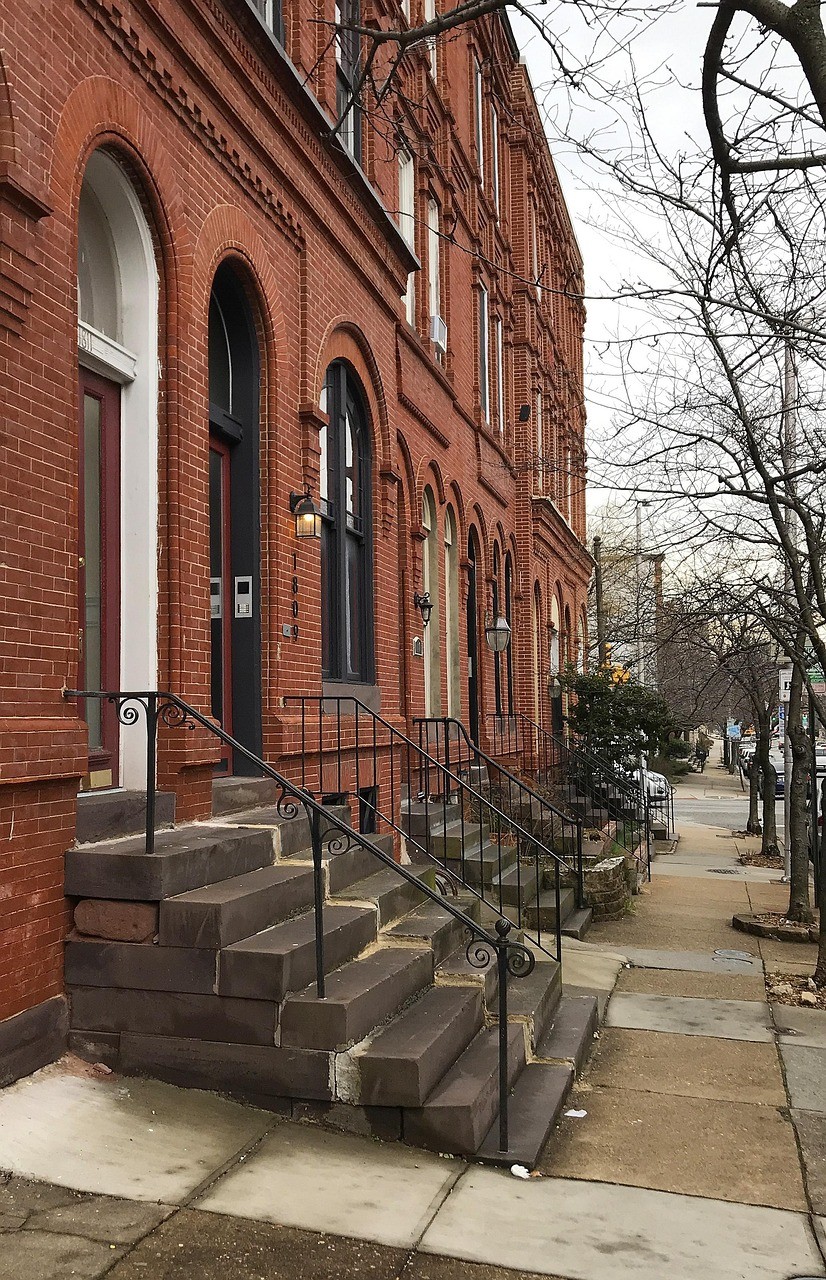
Exposed brick is not unique to Baltimore. Many East Coast cities have old neighborhoods where homes and factories were built with brick. As built, the walls were covered with lath and plaster, but when later renovated they are sometimes left uncovered.
The exposed brick brings to mind the famous saying of Colin Chapman, the engineer and co-founder, with his spouse Hazel, of Lotus cars. Referring to designing race cars, he said “Simplify, then add lightness.” He explained that “Adding power makes you faster on the straights. Subtracting weight makes you faster everywhere.” That’s good advice for home design as well. When the structure can also serve as the finished surface, you achieve simplicity which also provides honesty and efficiency – i.e., lower cost.
I’ve heard that when Baltimore homes were built the best masons worked on the exterior walls using higher-quality, weather resistant “face” bricks, while the apprentices were put to work on building the interior structural walls with lower-quality common bricks. Some might find the lack of finish on exposed interior walls less desirable. I like the character it provides. No two Baltimore row homes, despite how uniform they may look on the outside, will look exactly the same on the inside.
During Covid, I worked alongside a skilled carpenter as we converted an unfinished basement into a two-bedroom apartment. Other than electrical and plumbing, we did it all, from building reinforced concrete walls and stairs for the entry to framing walls and interior finishes. We worked carefully but now and then I’d step back and notice a glitch in our work – a part of the finish that wasn’t perfect, but the casual observer probably wouldn’t notice. We’d usually shrug and say – “that’s ok, it just shows that it was made by hand.”
Baltimore was a major US factory town, supported by its important port and key railroad links. Many row homes were built as affordable housing for factory workers, and they have been expanded and renovated, often multiple times, as families have come and gone. Each change leaves its mark. If you own a row home, you also will be drawn to make it your own. Just remember to “simplify, then add lightness.”