By Markian Melnyk, Realtor
You may think that a condominium is a less expensive path to home ownership, as compared to a single-family home. That can be true, but it is not always the case. Let’s compare two properties in Baltimore’s Federal Hill neighborhood and consider their pros and cons.
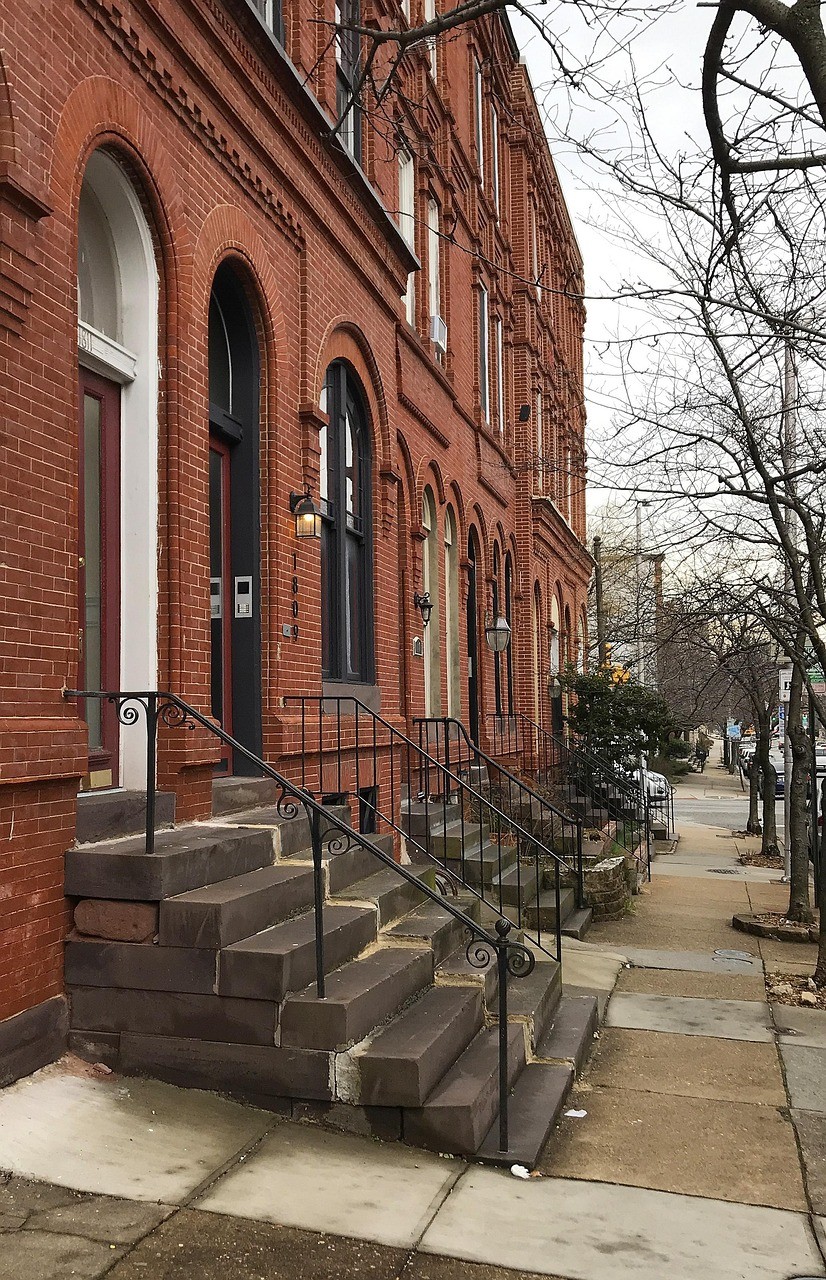
Property A is a two-bedroom, two-bath interior row home that I found for a buyer. It has about 1,400 square feet of above-grade living space (i.e., excluding the basement) and was listed at $339,000. This house is on a quiet street about four blocks from Key Highway which runs alongside the south side of Baltimore’s inner harbor. The house has good light for a row house, a tree in the front, and a roof deck with views of the harbor. Its condition is good and the home inspection revealed no significant structural or mechanical flaws.
Property B is a two-bedroom, two-bath condominium located only a few blocks away just off of Key Highway. It is a first-floor condominium apartment priced at $359,000, with 1,195 square feet of living space. The property condition also is good, and it is more modern than the row house. But despite its location it has only a sliver of a water view.
The condominium far surpasses the row house in amenities. You’ll find security, a gym, an outdoor pool, a concierge, a business center, and two garage parking spaces assigned to that unit. While street parking by the row house is often in short supply. Of course, the amenities come with monthly fees; $502 to the condominium, $327 for the HOA, and $218 a month in “other” fees. So, that’s a $1,047 a month hit in addition to the usual principal, interest, taxes, and insurance. Did I mention that both properties had about the same annual tax bill of $7,500?
Of course, a row house is not free of maintenance, and the cost and hassle of repairs falls on the homeowner. Things will break or leak. Wise row house owners place money aside each month – sort of their personal condo fee – to fund the future roof or HVAC replacement that will come like morning follows night. But row house maintenance is not as involved as keeping up a suburban home on a quarter acre. Row houses usually have no lawn maintenance and fewer exterior surfaces to caulk, paint, and clean. With interior row houses sharing two walls, and often an alley, with their neighbors, the row house resides at the midpoint between a condo apartment and a detached single-family home.
Lastly, there’s Luna – curiously the most popular dog and cat name in the US. If you’re a row house owner, Luna just moves in when you do. With the condo, well, you’ll want to check the condo’s covenants, conditions, and restrictions before buying. Many condo associations require pets to be registered with the condo board or management, and if Luna happens to be a pit bull, watch out. The rules may restrict the number, size (i.e., weight), and breed of cats or dogs.
So, there’s no right answer to the condo – row house question, just a tradeoff between money, independence/self-reliance, and convenience. Someone frequently traveling for work might value the condo’s flexibility - just lock it and leave, with no worries about security or maintenance. Someone else might prefer the freedom a row house provides to manage their own property, upgrade it over time, and to do it all without the need to ask a condo board’s permission. With so many reasonably-priced row houses, Baltimore provides many ways to afford a single-family home for condo prices.